

There’s a specific kind of hunger you earn in Tanzania. However, it’s not the dull pang of a missed lunch break. Thus, it’s a deep, primal appetite carved out by a morning of walking through emerald slopes. Additionally, muddy trails and the thunderous mist of a waterfall add to it. Moreover, my legs were tired, clothes clung to my skin from the spray of Materuni Falls.
Meanwhile, my stomach sang with anticipation. I was about to sit down to something far more satisfying than a simple plate of food. I was about to experience a Materuni Hot Traditional Meal. Perched on the fertile foothills of Mount Kilimanjaro, the village of Materuni is the homeland of the Chagga people. They’ve farmed this volcanic soil for centuries, and their cuisine is a direct, delicious reflection of the land.
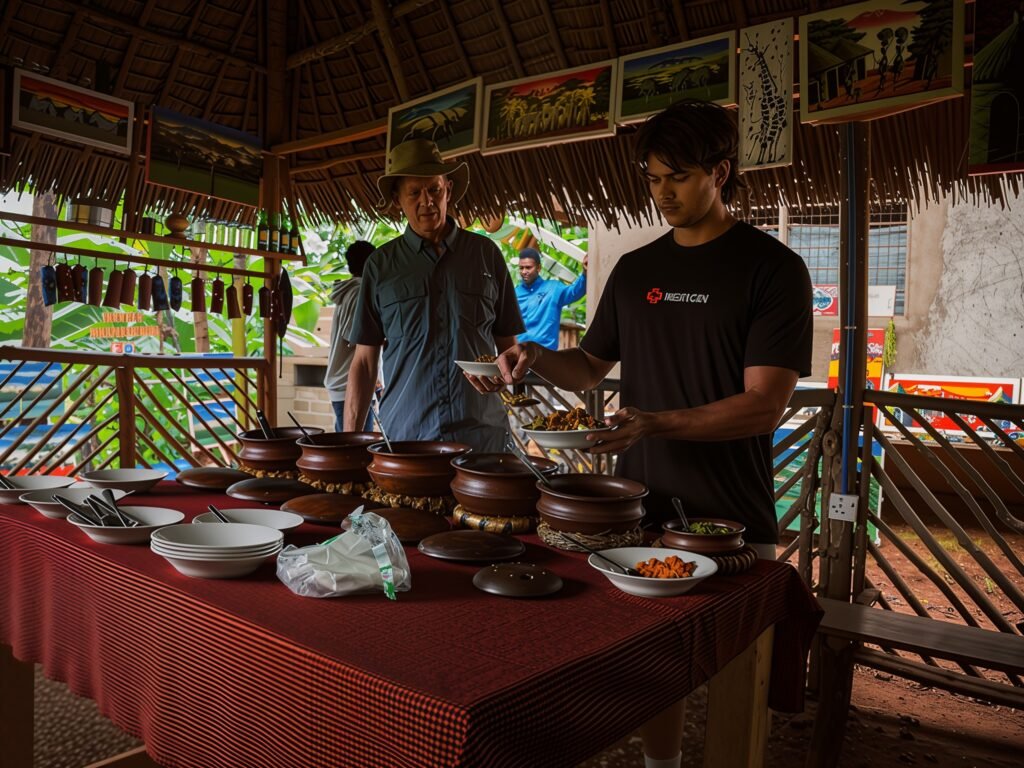
This isn’t a meal you simply order from a menu. It’s a ritual, slow-cooked over an open fire and shared with a view that stretches all the way to the plains below. As I arrived at a family’s homestead, a modest but proud home overlooking a valley so green it almost hurt my eyes, the air was thick with the most intoxicating aroma—wood smoke and something rich, almost nutty, simmering gently.
The “kitchen” was a separate, dimly lit hut, where a local mama, the undisputed queen of her domain, presided over a large, soot-blackened pot balanced on three stones over crackling flames.
The star of the show, and the soul of the Materuni hot meal, is Mtori. Don’t let its humble appearance fool you; this is a dish of genius, born from resourcefulness and designed to fuel a hard day’s work in the fields. The process I witnessed was a masterclass in patience.
It begins with green bananas—not the sweet, yellow fruit you eat for breakfast, but starchy, savory plantains. They are peeled, boiled, and then pounded in a wooden mortar with a long pole until they become a smooth, elastic, and surprisingly fluffy mass. Simultaneously, beef, rich with bones and connective tissue, is boiled for hours with just onions, salt, and perhaps a touch of tomato, creating a profoundly savory, clean-tasting broth.
The real magic happens when the pounded bananas meet the meaty broth. The mama used her hands to break the starchy mass into small dumpling-like dollops, dropping them straight into the simmering pot. She’d stir the pot with a massive wooden spoon, the motion so practiced it looked like breathing. As it bubbled, the banana dumplings would partially dissolve, thickening the soup into a velvety, gruel-like stew that coats the spoon and warms you from the inside out.
Finally, the moment arrived. A generous, steaming ladleful was poured into a wide, shallow bowl. The texture was a revelation—smooth, creamy, and hearty, with no dairy in sight. The flavor was pure, elemental comfort: the deep savoriness of beef, the earthy sweetness of the banana, and the whisper of wood smoke from the fire. The tender chunks of beef, which had given their all to the broth, fell apart at the slightest pressure.
We ate with our hands, a custom that feels instinctively right here. We used soft, doughy chapati or a chunk of firm ugali to scoop Mtori. Each mouthful was a textural dance. On the side, we had kachumbari—a fiery, fresh salad of chopped tomatoes and onions. Scotch bonnet peppers add heat, brightened with a squeeze of lemon. Its sharp, spicy crunch was the perfect counterpoint.
It contrasted with the deep, mellow stew. And to wash it all down, we had a cup of freshly brewed, jet-black Arabica coffee. Our hosts made it right there on the mountain. It was, without exaggeration, the best coffee I have ever tasted.
But the true magic of a Materuni hot traditional meal isn’t just the recipe. Moreover, it’s the context.
The panoramic view of Kilimanjaro’s peak shines through the clouds, hiding and reappearing. It’s the sound of children laughing and playing just out of sight.
It’s the profound quiet that descends on travelers. They stop talking, close their eyes, and just taste. It’s the unspoken language of hospitality from a people eager to share the fruits of their land and their labor.
This isn’t a meal you just eat. It’s a meal you feel. It’s the taste of volcanic soil and mountain water, of ancient tradition and genuine human warmth. So, if you ever find yourself on the slopes of Kili, skip the packaged lunch. Ask for the hot traditional meal. Pull up a tiny wooden stool, look out over the world, and take a bite of the Chagga soul. It will nourish you long after the bowl is empty.
What makes the Materuni hot traditional meal a memorable experience beyond just eating?
Additionally, the meal is a ritual, slow-cooked over open fire and shared with a view stretching to the plains below. It’s not just taste but the atmosphere—the wood smoke, the valley, the warmth of a Chagga home, and the quiet that descends as travelers taste and listen to the land.
What is Mtori and how is it prepared in Materuni?
We peel, boil, and pound green plantains into a fluffy mass, then drop them into a savory beef broth cooked with onions, salt, and tomato. The result is a velvety, hearty stew where the starchy plantains meet the meaty broth.
What roles do the bananas and beef play in the Mtori dish?
The bananas provide a starchy, savory foundation that thickens the broth when pounded and simmered with the beef. The beef, cooked long and gentle, releases deep flavors from bones and connective tissue, enriching the broth and balancing the dish’s earthy sweetness.
How is the meal enjoyed in Materuni, and what about the surroundings?
People eat the meal with their hands, using soft chapati or hard ugali to scoop Mtori and kachumbari with peppers. While Kilimanjaro’s peak peeks through clouds, the hosts serve the meal, and the sound of children and warm hospitality make it a shared gift.
Where is Materuni and who prepares the meal?
Materuni sits on the fertile foothills of Mount Kilimanjaro, homeland of the Chagga people. A local mama in a humble homestead prepares the hot traditional meal, guiding the cooking with practiced hands over crackling flames in a soot-blackened pot.


